a possible new-to-science warbler hybrid between Northern Parula and Pine Warbler
A few winters in a row, in Georgia, a single warbler returned repeatedly to a suet feeder. At first glance, it resembles a Northern Parula. And yet, the longer one looks, the less satisfactory that identification becomes.
Patterns in the Familiar
I first encountered this warbler not in the field, but through my computer screen while reviewing observations on iNaturalist. When I review, I tend to work through observations only one species at a time rather than broadly. I move through them sequentially, confirming those that fit, and pausing when something does not. At that point, I take a closer look, and when necessary, suggest a correction along with an explanation. I love reviewing this way because working within a consistent comparison set (one species) makes subtle departures from typical variation easier to detect.
One day, while scrolling through Northern Parula observations, one bird stopped me cold. It stood apart in a way that was immediate, if not yet defined. I couldn’t quite say why yet, but never had I been so certain that this bird was no simple Northern Parula. I set it aside without confirming or correcting the identification, feeling that it required a closer look before any conclusion could be drawn. I then went on to reviewing more Parulas.
After reviewing a few more pages of Northern Parulas, it appeared again. Then some more. Every time, the same bird immediately stood out amongst the crowd of Northern Parulas. A quick check confirmed it was always from the same location, but the years changed.
Further review revealed hundreds of photographs of the same bird, spanning 2022 to 2026, all taken by a single observer, Mark Hughes, in Georgia.
A Collection of Small Inconsistencies
A strange bill - Northern Parula typically shows a thin, pointy, bicolored bill, with the lower mandible often yellow or orange and blending into the yellow throat. In this individual, the bill is pinkish, does not blend into the colour of the throat and is noticeably more robust with a blunter tip. Assessment of bill shape and proportions from photographs is often limited because angle and posture, which can alter apparent proportions. In this individual, however, the atypical features are consistently visible across more than a hundred photographs.
Green confined to the crown - Greenish coloration is confined to the forehead and crown, not extending onto the nape or sides of the head as expected. The result is a more isolated patch of colour rather than a diffuse pattern of greenish mottling typical of non-breeding Northern Parula.
Olive streaks - Subtle olive toned streaking shows along the sides of the breast, a feature that does not appear consistently, if at all, in pure Northern Parula. Such streaking is consistent with male Pine Warbler.
Uninterrupted transition from head to breast. The blue-gray of the cheeks extends cleanly onto the side of the breast, forming a relatively straight boundary rather than the more angular, broken transition typical of Northern Parula. The malar on this bird is entirely yellow, as in Pine Warbler, whereas it is mostly blue gray in a pure Northern Parula.
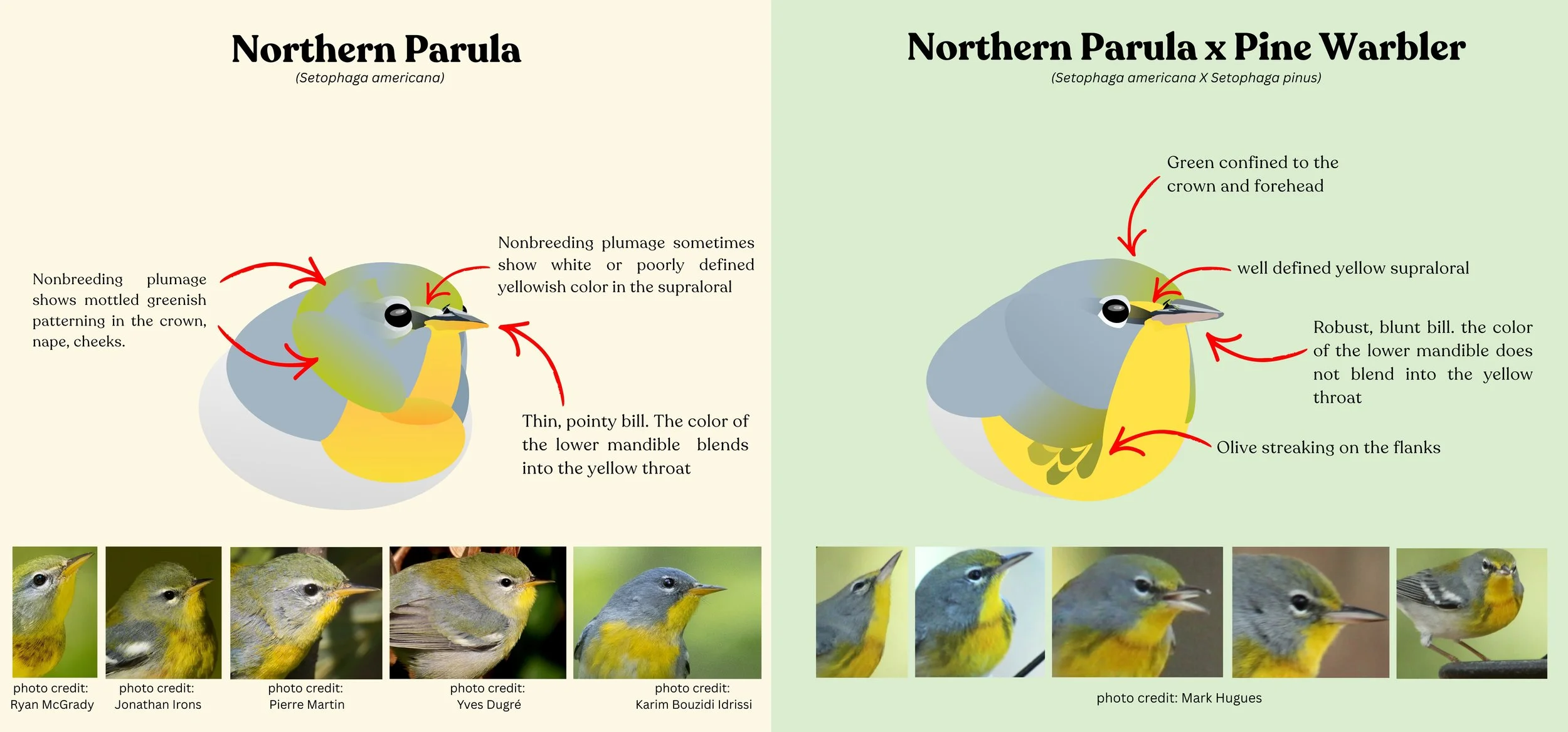
Behavior and wintering range further adds to the anomaly, but are more tentative than the other cues. The bird has been observed feeding at a suet feeder, a behavior more typical of Pine Warbler than Northern Parula. Its repeated winter presence in Georgia also aligns well with Pine Warbler, while Northern Parula typically winters in the Caribbean.
Individually, some of these features could be brushed off as individual variation. Together, they form a pattern that does not sit comfortably within the known variation of the species.
An Opportunity to Learn
Perhaps the most interesting aspect of this bird is not what it is, but what it represents.
Here is an individual observed over multiple years, photographed extensively, and accessible to anyone willing to look closely. It offers an opportunity to examine variation, to question assumptions, and to refine our understanding of what defines a species in the field.
If it returns again, there may even be opportunities for more definitive answers, including genetic sampling. Until then, it remains an open question.
And in birding, those are often the most valuable.
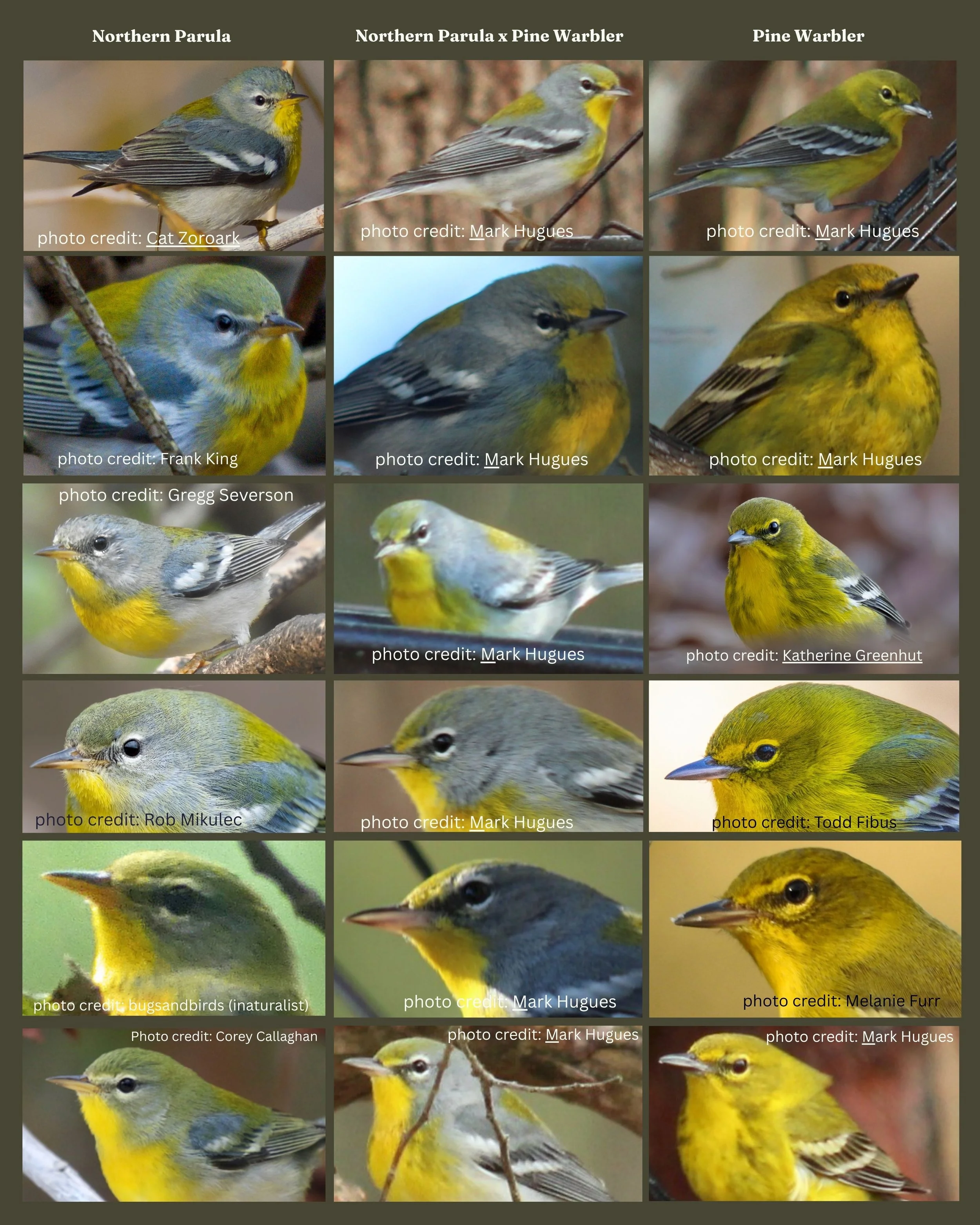
Comparison plates
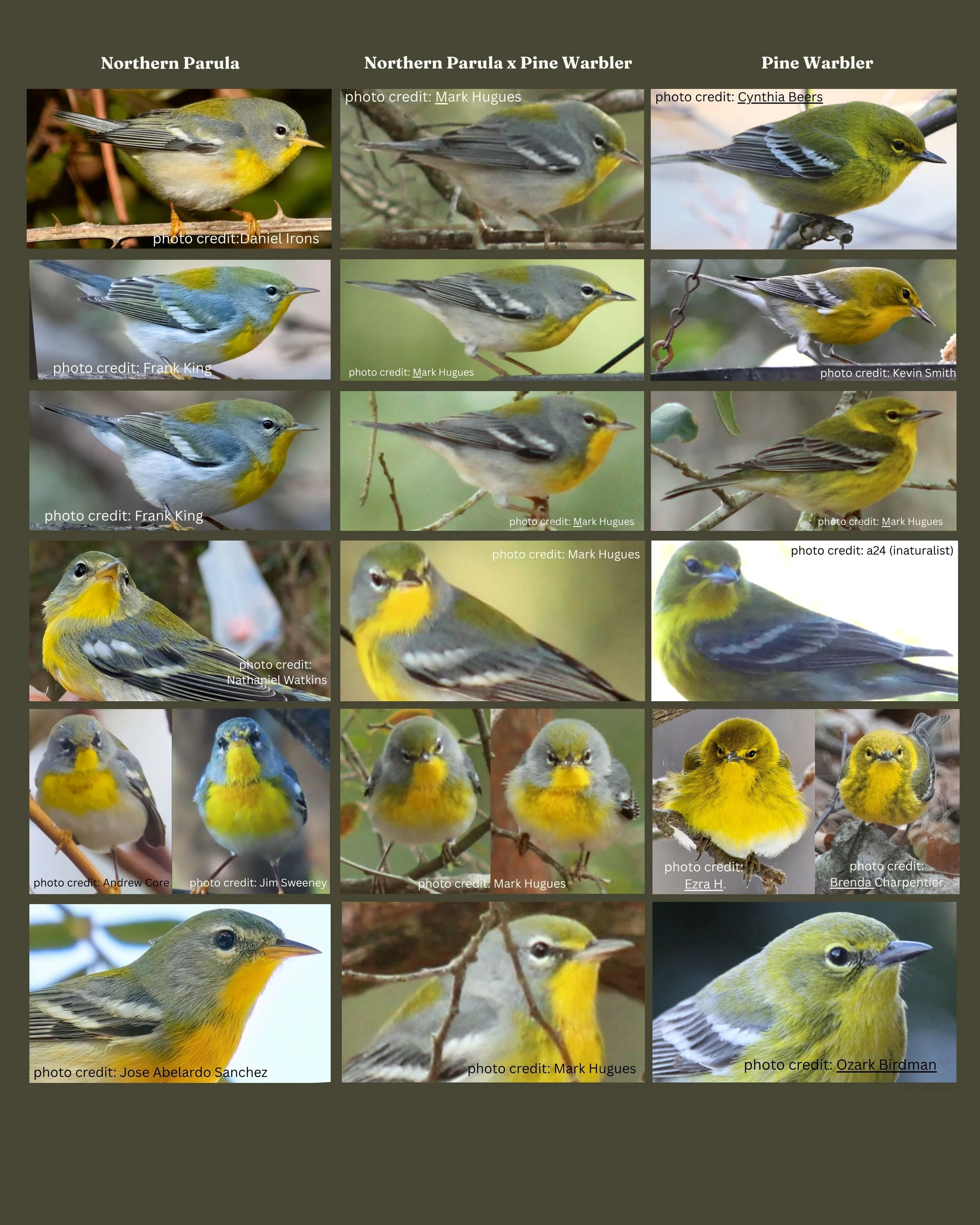
Comparison plates (part II.)